
Product Research
Decades of research into orchard light management
Reflective orchard ground cover is not a new or experimental concept. The technology has been investigated internationally for decades and is used in commercial fruit-growing regions around the world.
Research has examined how redirecting sunlight from the orchard floor back into the canopy can influence the orchard light environment and, under different production conditions, fruit colour development, anthocyanin accumulation, maturity, soluble solids (°Brix), fruit quality and harvest outcomes.
INTERNATIONAL RESEARCH
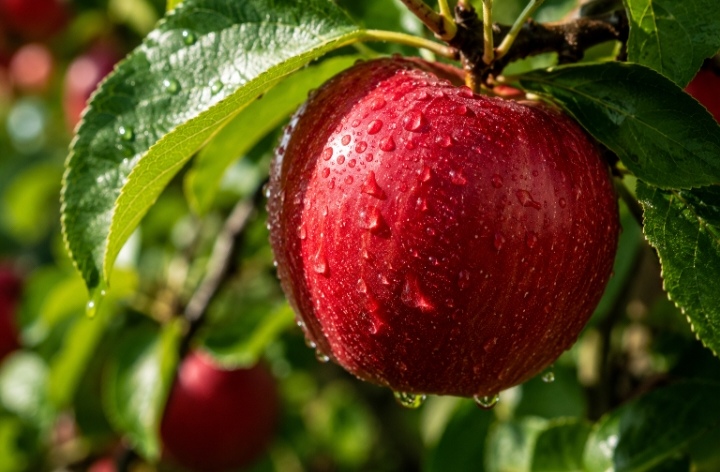
Reflective orchard ground cover has been studied internationally since the 1990s across major fruit-growing regions including the United States, Chile, Australia, New Zealand, Italy and Spain.
The principle is simple: sunlight that reaches the orchard floor can be redirected back into the canopy, increasing light availability around fruit that would otherwise receive less direct exposure.
Over decades of research, that principle has been tested across different crops, cultivars and orchard systems — from traditional orchards to modern high-density production.
Today, reflective ground cover forms part of a much broader international conversation around orchard light management, fruit colour and quality.
BEYOND COLOUR: WHAT HAS INTERNATIONAL RESEARCH REPORTED?
Colour development has received considerable attention in reflective ground-cover research, but it is not the only fruit response researchers have measured.
Published studies have examined measurable changes within both the orchard canopy and the fruit itself. Researchers have measured reflected photosynthetically active radiation (PAR) alongside fruit skin colour, colour coverage, anthocyanin development, soluble solids (°Brix), maturity and other fruit-quality characteristics.
Across different studies, one finding appears repeatedly: changing the amount and distribution of light within the canopy changes the environment in which shaded fruit develops.
Research has reported improved red colour development and colour coverage in several fruit crops, while some studies have also documented changes in anthocyanin accumulation, soluble solids and maturity.
These findings take the conversation beyond the simple question:
“Does the fruit become redder?”
They lead to a much more interesting question:
What happens to the fruit when more usable light reaches previously shaded parts of the canopy?
That is where the science of reflective orchard ground cover becomes particularly interesting — because researchers are no longer looking at colour alone, but at how changing the orchard light environment can influence fruit development during the critical pre-harvest period.
REFLECTED PAR
Research has measured how reflective ground cover changes the light environment within the canopy, including increases in reflected photosynthetically active radiation (PAR) reaching lower and shaded canopy zones.
ANTHOCYANIN DEVELOPMENT
Light plays an important role in the formation of anthocyanins — the pigments responsible for red and purple colour in many fruit crops. Research has reported increased anthocyanin accumulation alongside enhanced red colour development under improved reflected-light conditions.
LIGHT WHERE DIRECT SUNLIGHT DOESN'T REACH
The value of reflection is not simply more brightness. Its direction matters. Light reflected upward from the orchard floor can reach fruit surfaces and lower canopy areas that receive limited direct sunlight from above, creating a different light environment around shaded fruit.
What Has International Research Reported?
MORE THAN 50 COMMERCIAL FIELD TRIALS
Since 2005, the Washington Tree Fruit Research Commission has conducted more than 50 replicated field trials evaluating reflective ground covers in commercial orchards.
The research has included apples, pears, sweet cherries, peaches and nectarines, examining effects on fruit colour, size, fruit set, yield and overall crop value.
Across this programme, researchers reported that certain reflective ground-cover treatments consistently improved yields and fruit value across the crops studied, through increased fruit set and/or fruit size, while frequently improving red colour development.
COMMERCIAL APPLE & PEAR RESULTS
Research in commercial Washington apple and pear orchards found that reflective ground covers increased the amount of light available within the canopy, particularly in lower and shaded areas.
Across the trials, researchers reported consistent improvements in fruit colour and yields of target fruit through increased fruit set and/or harvest size. Colour development was frequently advanced, allowing earlier harvest and, in some cases, fewer picks.
2024 ‘EVERCRISP’ RESEARCH
A 2024 peer-reviewed study published in Frontiers in Plant Science evaluated reflective ground cover in commercial ‘EverCrisp’ apple orchards in the Mid-Atlantic United States over two growing seasons.
Researchers recorded more than 5 to 25 times greater light reflectance than the control, together with significantly higher anthocyanin content and enhanced red skin colour.
Treated fruit reached more than 60% blush one week before commercial harvest — and two weeks earlier than untreated control fruit
THE ORCHARD FLOOR ISN'T PASSIVE
The ground beneath an orchard is part of its light environment. Changing that surface changes what happens to sunlight that passes through the canopy — whether it is absorbed, scattered or reflected back toward the crop.
LIGHT HAS DIRECTION
Two fruit can receive a similar amount of total light while receiving it from different directions. Reflective ground cover introduces upward-directed light, reaching fruit surfaces that overhead sunlight may not illuminate as effectively.
THE SUN MOVES. SO DOES THE LIGHT.
An orchard's light environment changes continuously as the sun moves across the sky. Time of day, row orientation, canopy shadows and solar angle all affect where sunlight reaches the orchard floor — and where reflected light can travel next.
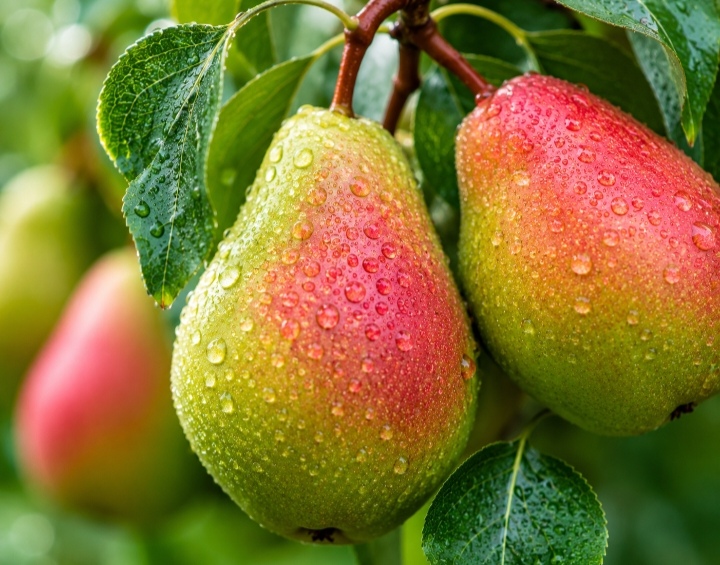
PEAR RESEARCH — BLUSH ACROSS THE CANOPY
In blushed pear cultivars, commercial appearance depends not only on whether red colour develops, but where and how evenly that blush develops across the fruit population.
Research in commercial pear orchards has evaluated reflective ground covers as a pre-harvest tool for improving the light environment around fruit throughout the tree.
This is particularly relevant where fruit on the outer canopy develops good blush while fruit from less-exposed positions struggles to reach the same colour expression.
For pear growers, the commercial question becomes:
Can more of the crop reach the colour specification you’re targeting?
CHERRIES LIGHT. PIGMENT. COLOUR. Reflective-ground-cover research in cherries explores the relationship between canopy light and anthocyanin development as fruit approaches harvest.
TABLE GRAPES: LIGHT IN THREE DIMENSIONS
A grape bunch develops within a complex environment of leaves, shoots and trellis structure. Reflective ground cover introduces light from below, creating another pathway for sunlight to reach the fruiting zone.
30+ YEARS OF INTERNATIONAL ORCHARD RESEARCH
Three decades. Multiple crops. Continents of commercial fruit production. And the research continues.
Reflective orchard ground cover has been studied through university research, horticultural institutions, replicated field trials and commercial orchard evaluations across some of the world’s major fruit-producing regions.
The body of evidence has grown alongside modern fruit production — across changing cultivars, production systems and increasingly sophisticated orchard management.
This is not a technology waiting to be proven.
It is an established orchard-management approach supported by more than three decades of international investigation, commercial experience and continuing scientific research.
**THREE DECADES OF RESEARCH.
REAL-WORLD COMMERCIAL APPLICATION.
A TECHNOLOGY THAT CONTINUES TO EVOLVE
The research presented on this page summarises findings from published international studies and commercial orchard trials. Results reported in individual studies reflect the specific cultivars, orchard systems, climatic conditions, materials and management practices evaluated by the researchers.
AgriSun references these studies to provide growers with access to the scientific evidence surrounding reflective orchard ground-cover technology. Study findings should be considered within the context of the conditions under which the research was conducted.